How Fabric and Scale Affect Petite Proportions.
Fit isn't only about pattern lines. The weight of the fabric, the size of a floral, the depth of a ruffle — every one of those details either flatters a petite frame or quietly works against it.
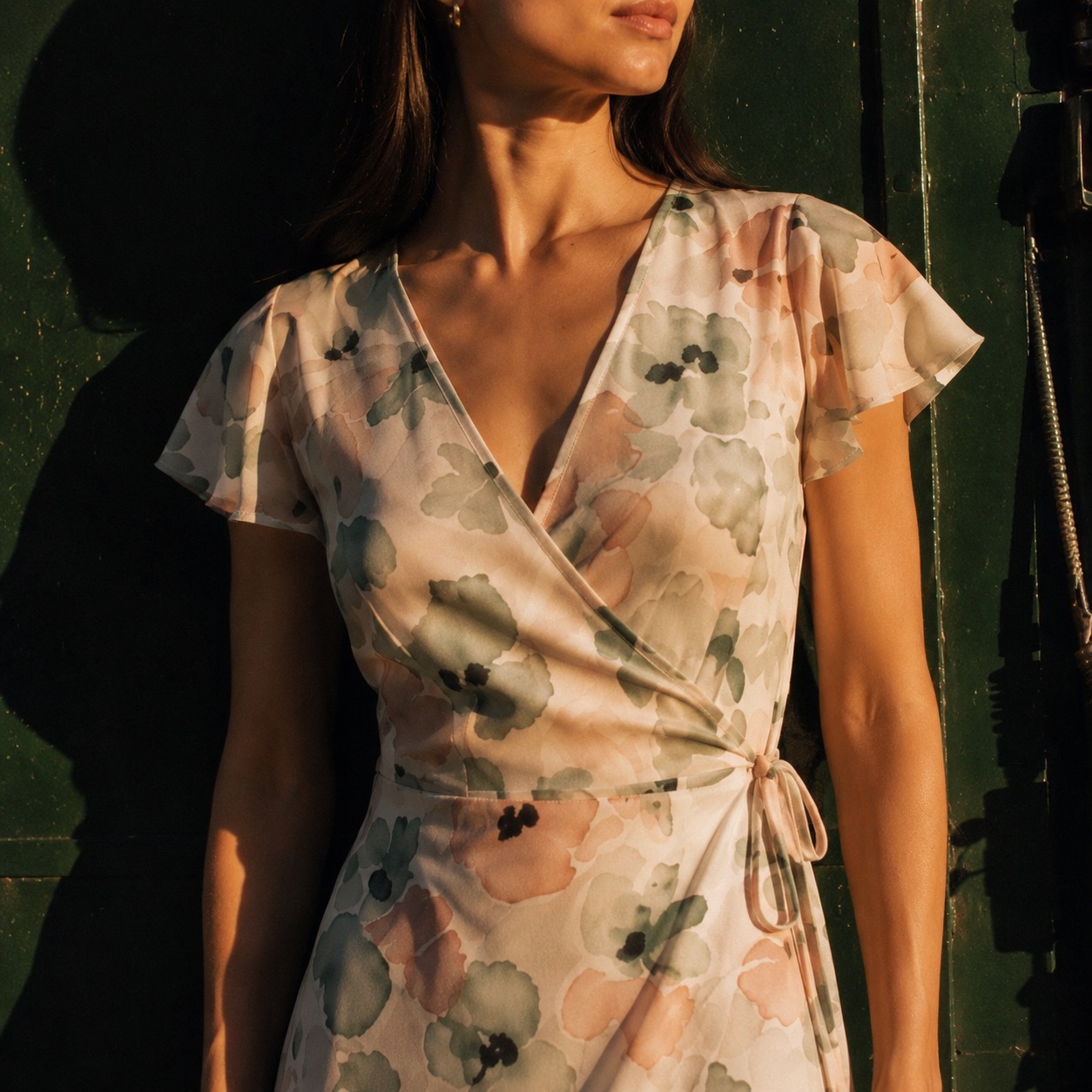
When we design a piece for Nectar, the silhouette is only half of the decision. The other half is the surface — the cloth, the print, the trim, the way light catches a hem. These choices change how a dress reads on a smaller frame even when the measurements are spot on.
Here are the design levers that matter most, and how we balance them so the finished piece feels in proportion rather than scaled up from someone else's body.
Fabric Weight
Heavy wovens — thick cottons, structured taffetas, dense brocades — overwhelm a petite silhouette. Lighter, fluid fabrics drape closer to the body and follow movement instead of standing away from it.
Print Scale
A floral repeat that looks delicate on a 5'7" frame can read as oversized on a 5'1" one. We choose smaller, denser prints so the pattern feels intentional rather than enlarged.
Lace Placement
Where lace sits matters as much as how much of it there is. Trims placed at the natural waist, wrist, or scalloped at the hem draw the eye to flattering points instead of fragmenting the silhouette.
Sleeve Volume
Puff and flutter sleeves are scaled to a petite bicep and cap. A balloon sleeve cut for a regular pattern can dwarf the shoulder and shorten the neckline; ours hold their shape without taking over.
Trim Width
Belt widths, ruffle depths, button sizes, and collar points all live on a proportion scale. A two-inch ruffle that looks subtle on a longer torso can read as a full tier on a petite one — so we narrow it.
Skirt Fullness
A skirt with too much sweep adds visual weight to the lower half and shortens the leg line. We balance fullness with length, so the skirt moves beautifully without overwhelming the frame.
See it in the collection.
Every Nectar piece is designed with these proportions in mind. Read the Fit Guide for the full philosophy, or shop the current collection to see it on the rail.
Keep Reading
All Journal Entries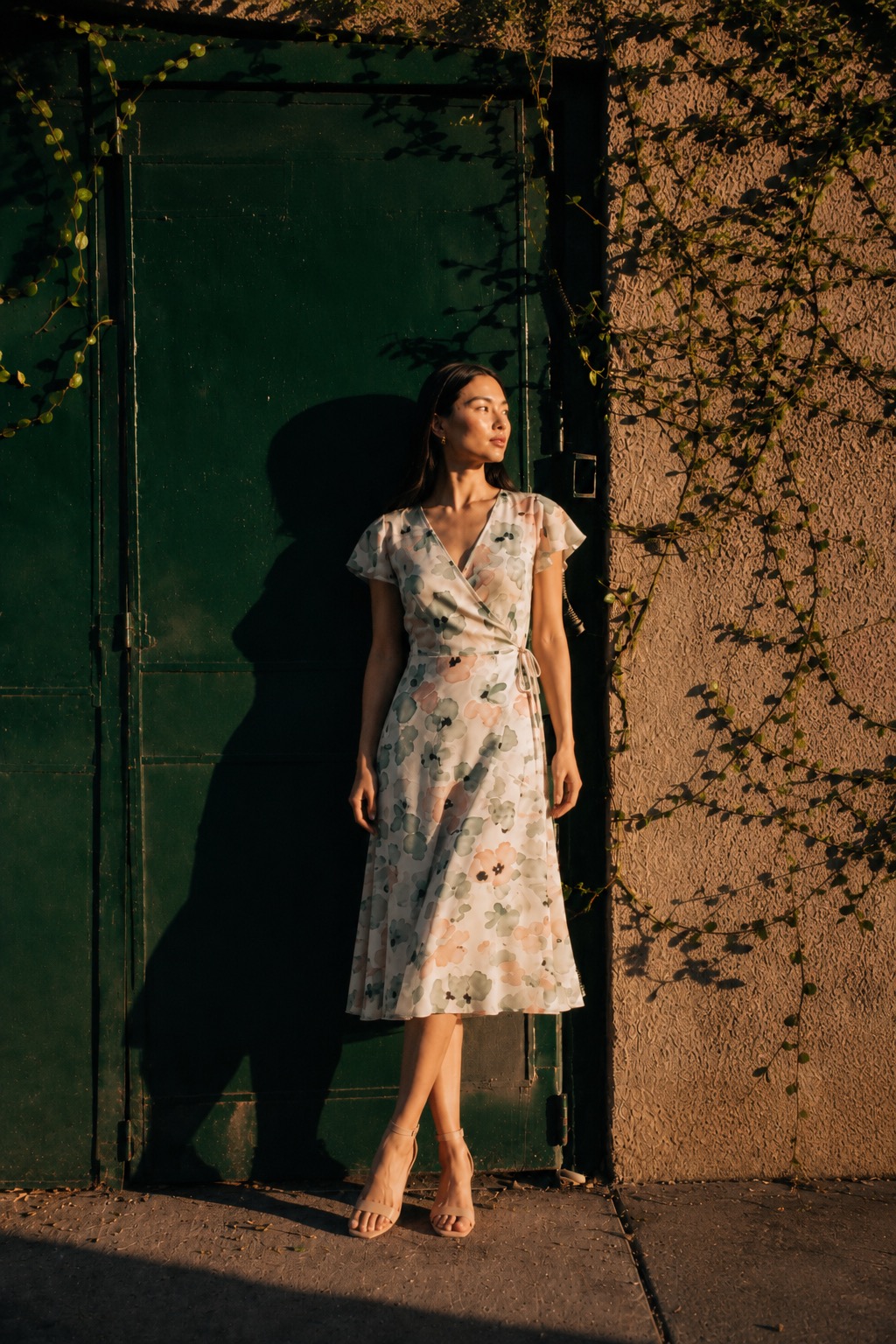
How to read garment measurements before you buy.
Bust, waist, hip, HPS-to-hem — and how to use them to choose your size.
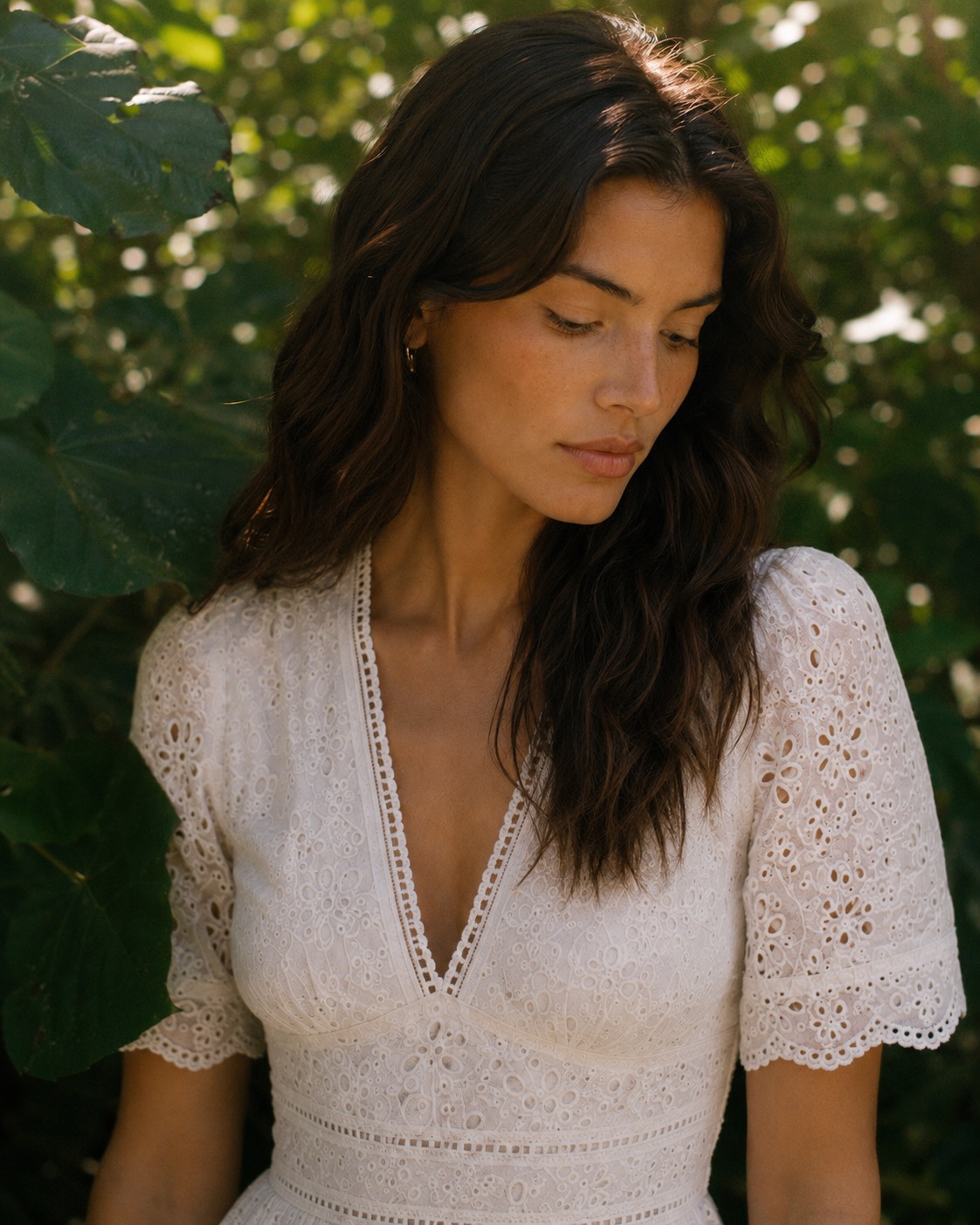
Why petite fit is more than a shorter hem.
Shoulder width, torso length, waist placement — not just the hem.
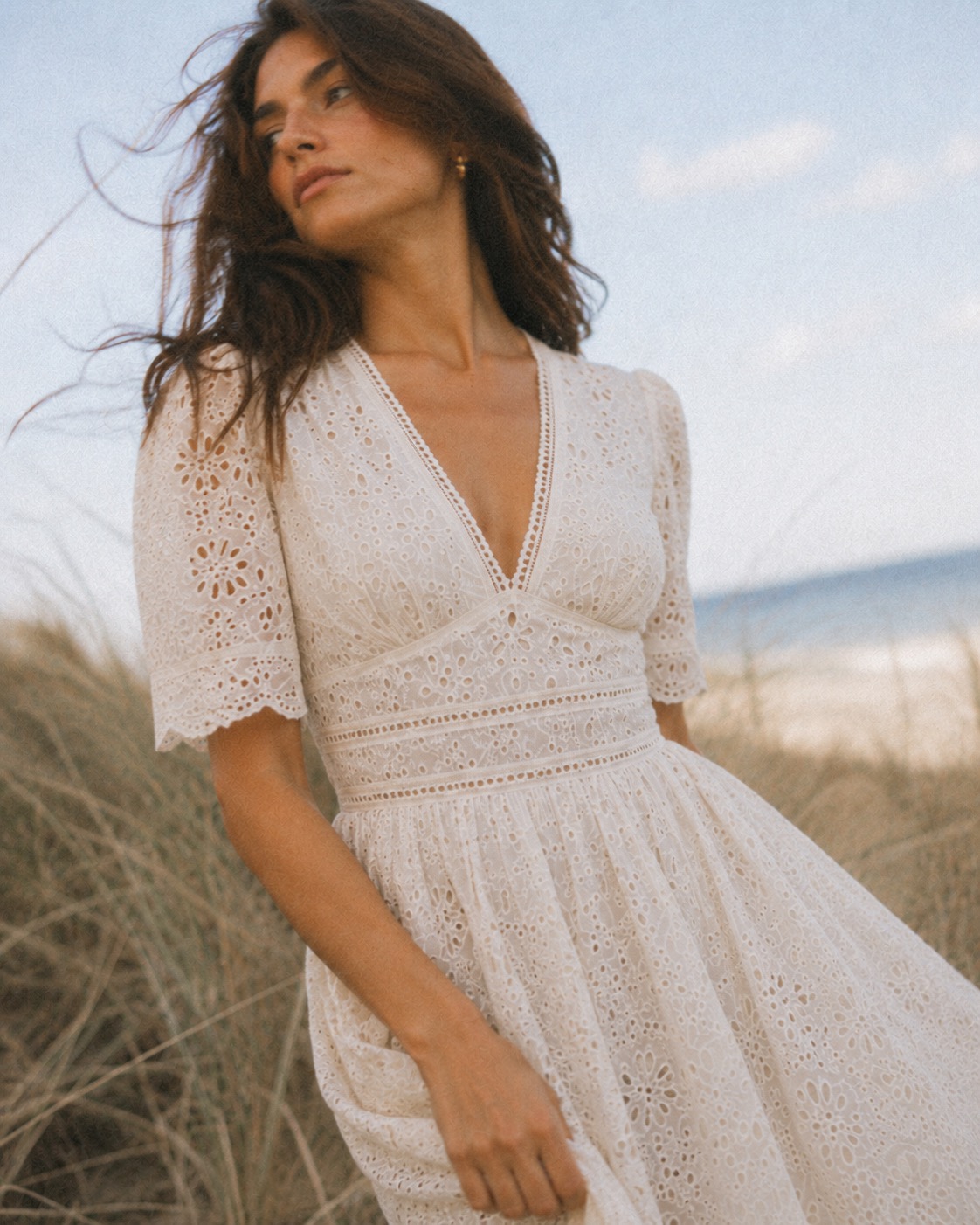
What does petite mean in clothing?
Proportion, torso length, and why grading down isn't designing for 5'2".