How to Read Garment Measurements Before You Buy.
A few minutes with a soft tape measure will tell you more about how a dress will fit than any size letter on the label. Here is what each measurement means, and how to use it.
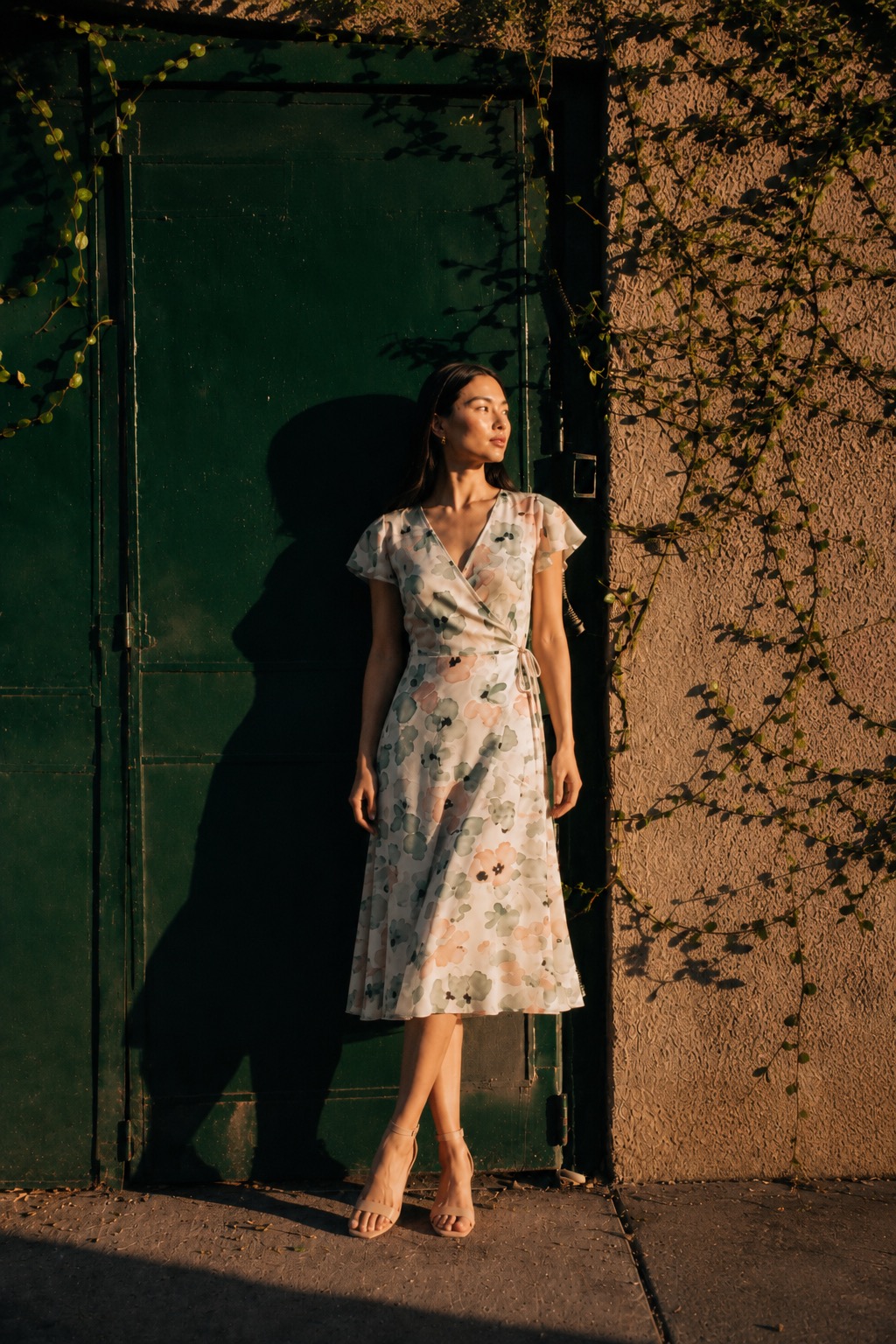
Sizing letters are useful shorthand, but they vary widely between brands and even between silhouettes within the same brand. Garment measurements remove the guesswork: they describe the actual finished piece in inches, so you can compare it directly to your body.
Start by measuring yourself in a soft bra and a thin top. Note your bust, natural waist, and full hip. Jot down the length from your shoulder to where you'd like a hem to land — that's your reference HPS-to-hem.
Bust
Measured across the fullest part of the garment, then doubled. Compare it to your own bust measurement plus your preferred ease — close-fit needs 1–2 inches of extra room, relaxed-fit closer to 3–4.
Waist
Taken at the narrowest part of the bodice, where the dress is designed to sit. On a petite frame, the waist seam should land at your natural waist — the smallest part of your torso, usually just above the belly button.
Hip
Measured across the fullest part of the skirt or hip area. Important for fitted silhouettes; less critical for full skirts and A-lines, which skim rather than hug.
HPS to Hem
HPS stands for high point of shoulder — the seam where the strap meets the neckline. HPS-to-hem is the full vertical length of the dress, and it is the single best predictor of where a hem will land on you.
Sleeve Length
Measured from the shoulder seam to the cuff. On a petite frame, sleeves should end at the wrist bone for long sleeves, at the elbow for three-quarter, and at the mid-bicep for flutter or puff styles.
Waist to Hem
The length of the skirt alone. Useful when you know your waist sits higher or lower than average — pair it with HPS-to-hem to picture exactly where a midi or maxi will fall on your leg.
A gentle reminder: fit is a relationship between the garment and the person wearing it. The same measurements read differently on a long torso versus a short one, or on a full bust versus a smaller frame. Use the numbers as a starting point, not a verdict.
Not sure which size is yours?
Send your measurements to a Nectar fit specialist. We'll recommend a size and flag the styles cut closest to your proportions — usually within a business day.
Keep Reading
All Journal Entries
Why petite fit is more than a shorter hem.
Shoulder width, torso length, waist placement — not just the hem.
What does petite mean in clothing?
Proportion, torso length, and why grading down isn't designing for 5'2".

You look great today: the quiet pleasure of dressing for yourself.
No occasion required. On personal style, comfortable proportions, and wearing the clothes you love on ordinary days.