The Maribel Lace Dress is here · 20% off with code NECTAR20
The Journal

What Does Petite Really Mean?

It is not a synonym for short. Petite is a complete set of proportions — shoulder width, torso length, armhole depth, and sleeve placement — engineered for a frame 5'4" and under.

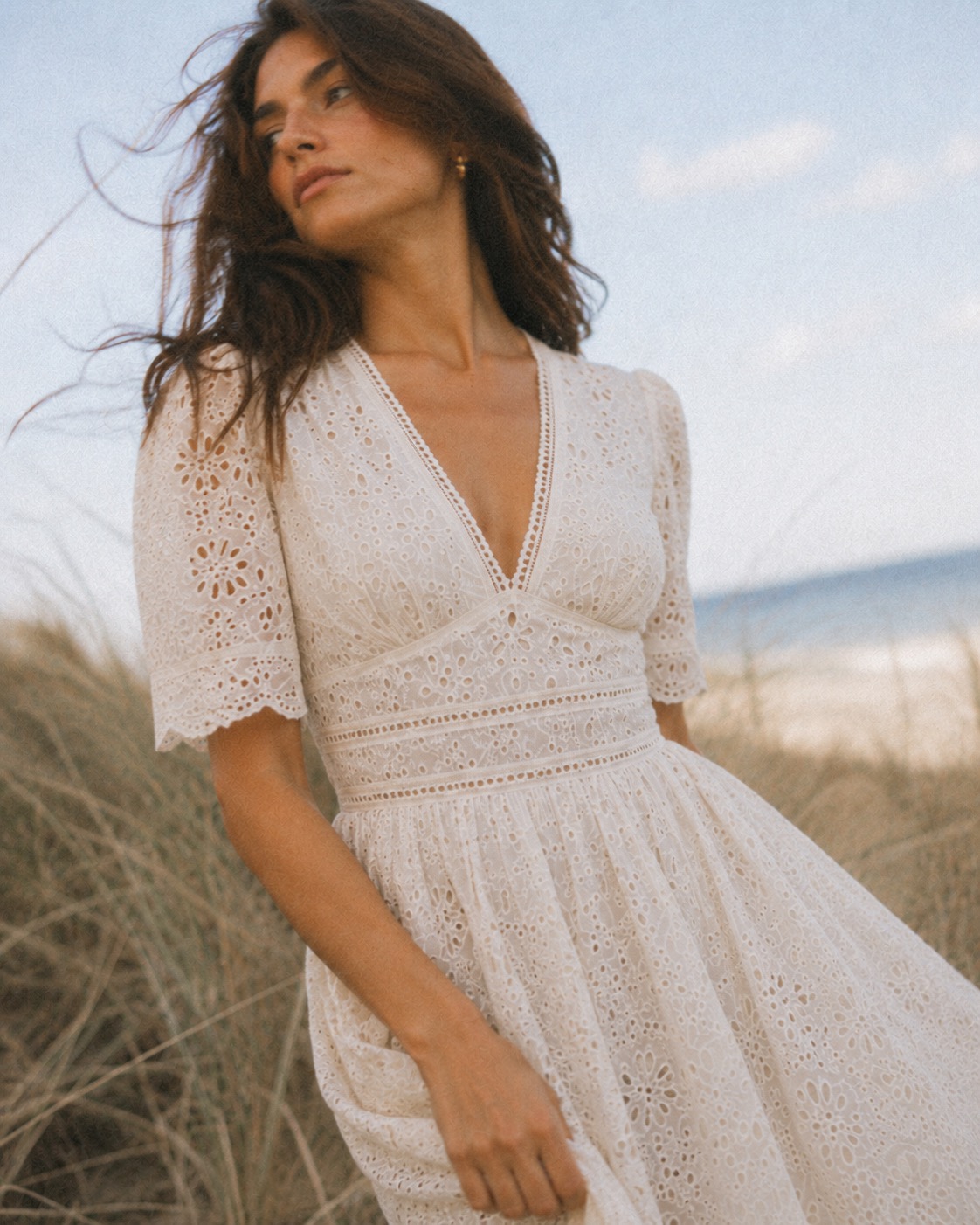
Petite model in an ivory eyelet midi dress on a windswept beach at golden hour.
Definition

Petite is proportional, not just proportional height.

In the fashion industry, petite refers to clothing proportioned specifically for women who are 5'4" (163 cm) and under. The term comes from the French word for "small," but its meaning in ready-to-wear is far more technical than simply being short.

A petite frame is characterised by shorter measurements from shoulder to waist, a higher waist placement relative to total height, narrower shoulder width, shorter arm length, and a shorter rise (the distance from waist to crotch). These proportions are what make petite sizing distinct — not the inches on the tape measure alone.

The Distinction

Petite versus Short.

Every petite woman is short, but not every short woman is petite. Here is where the two diverge.

Short

A woman who is 5'3" but has the torso length, shoulder width, and arm length of a woman who is 5'7" is short, not petite. She may find regular sleeves too long, but the shoulder seam and waist placement of a standard size will fit her correctly.

Height only · Standard proportions

Petite

A woman who is 5'3" with a shorter torso, narrower shoulders, and shorter arms is petite. Regular sizing will gap at the shoulders, bag at the waist, and drown her in sleeve length — because the proportions were drafted for a taller frame.

Height + proportional frame · Shorter torso, narrower shoulders, shorter rise
Technical Detail

The proportions that define petite.

Torso Length

Shorter from shoulder to natural waist

A petite torso is typically 1.5–2 inches shorter than a regular frame. This means a standard dress waistline sits too low, creating excess fabric above the hip and a visual break in the wrong place. Petite patterns raise the waist so it sits at the true natural waist — the narrowest point of the torso.

Shoulder Width

Narrower across the back

Petite shoulders are proportionally narrower. A regular-size shoulder seam will extend past the shoulder point, causing the sleeve to droop and the neckline to gape. Petite patterns reduce shoulder width so the seam sits exactly at the shoulder bone, giving structure without bulk.

Armhole Depth

Higher and smaller opening

A deeper armhole — common in regular sizing — pulls the entire garment down and creates gaping at the underarm. Petite armholes are raised and scaled smaller, keeping the garment anchored at the shoulder and eliminating the need to constantly tug the bodice back into place.

Sleeve Length

Mapped to a shorter arm span

Petite sleeves are not simply hemmed shorter. The entire sleeve cap and bicep width are scaled to a smaller arm circumference, and the length is mapped to end at the wrist bone — not past the knuckles. This preserves the intended silhouette of the sleeve, whether slim, gathered, or flared.

Rise & Inseam

Higher waist, shorter leg line

The distance from waist to crotch is shorter on a petite frame. A regular rise sits below the natural waist, elongating the torso visually and shortening the legs. Petite rises are raised to sit at or just above the natural waist, restoring balanced proportions. Inseams are shortened to match a petite leg length without pooling at the ankle.

Overall Length

Hem placement calibrated by height band

A 48-inch maxi on a 5'7" frame brushes the ankle. On a 5'1" frame, it drags. Petite lengths are calibrated so a midi hits below the knee, a maxi sweeps the top of the foot, and a mini falls at a flattering point on the thigh — all proportioned to the wearer's total height.

The Problem

Why regular sizing, shortened, still does not fit.

Most brands approach petite as an afterthought: take a standard pattern, chop two inches off the hem, and call it a petite option. This is grading down, not drafting for a petite frame — and it shows.

When you shorten a regular garment without adjusting the proportions, the waistline stays too low, the shoulders remain too wide, and the sleeves still end at the knuckles. The wearer looks as though she is wearing someone else's clothes — because, in effect, she is. The proportions were engineered for a taller body, and no amount of hemming can fix a shoulder seam that sits two inches past the shoulder point.

True petite clothing starts with a pattern block drafted on a 5'2" form. Every seam, dart, and curve is placed for a petite skeleton from the very first paper pattern — not adjusted after the fact.

Our Philosophy

Engineered from the shoulder down.

At Nectar Petite, we do not grade down. Every pattern begins on a 5'2" block, with shoulder slope, armhole depth, and torso length set correctly from the first stitch. The result is clothing that fits the way it was intended to — not clothing that has been made to fit.

We calibrate every length to a specific height band: a maxi that sweeps the floor at 4'10", brushes the foot at 5'1", and sits at the ankle at 5'4". Sleeves end at the wrist bone. Rises sit at the natural waist. And shoulders sit flush — never dropped, never gaping.

This is petite by design, never by compromise.

FAQ

Common questions.

Is petite just for very short women?

No. The industry standard for petite is 5'4" and under — which includes a significant portion of the female population. If you are 5'3" and find regular sleeves too long, shoulders too wide, or waists too low, you are likely petite.

Can I wear petite if I am 5'5" or 5'6"?

Yes, if your proportions match a petite frame — shorter torso, narrower shoulders, shorter arms. Height is a guideline, not a rule. Many women at 5'5" or 5'6" with shorter torsos find petite tops fit better than regular sizes.

Is petite the same as plus size?

No. Petite refers to proportions and frame size, not body weight or circumference. A woman can be both petite and plus-size — she would need a petite plus size, which accounts for both the proportional frame and the fuller measurement.

Why don't more brands make true petite clothing?

Drafting a separate pattern block for petite is expensive. It requires a different set of fit models, grading rules, and quality-control standards. Most brands opt to shorten existing patterns instead — which is why so much 'petite' clothing still does not fit.

How do I know if I need petite sizing?

If shoulder seams consistently sit past your shoulder bone, sleeves bunch at your wrists, waistlines sit below your natural waist, or hems drag even in the smallest regular size, your proportions are likely petite. Our Fit Guide includes a measurement checklist to confirm.

Experience the difference.

Every Nectar piece is drafted from scratch on a petite block — not shortened after the fact.