In praise of patina: on dresses and other well-loved things.
A weathered car, a field of late dahlias, and a lace dress that has clearly been worn before. On the quiet beauty of things that improve with use — and why newness is overrated.
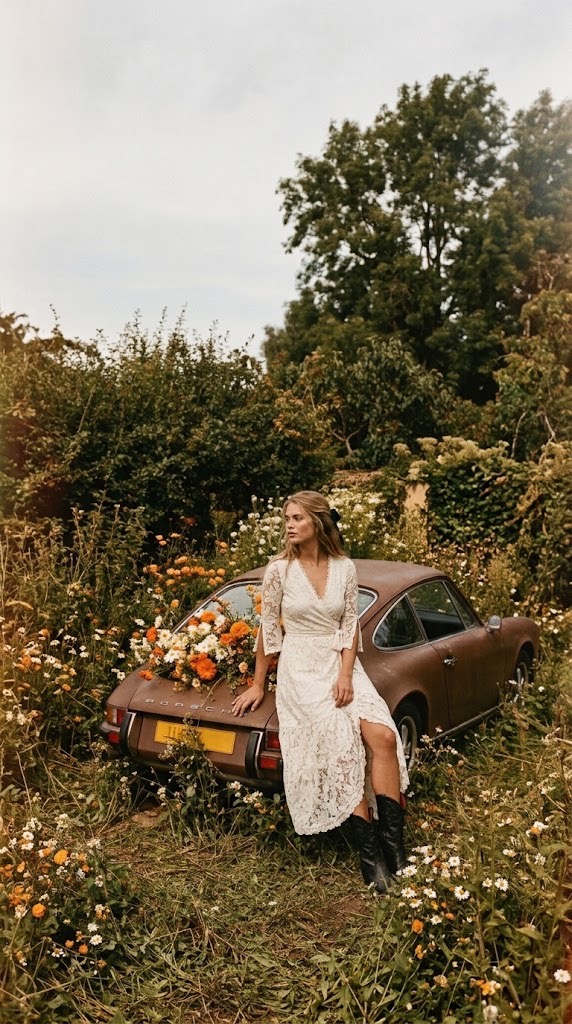
There is an old car in this photograph that has not been polished in decades. Its paint has faded to the colour of autumn, its bumpers have dulled, and the dahlias have quietly moved into the space where an engine used to be. Nobody would call it pristine. Everybody would call it beautiful.
A well-made dress earns the same kind of beauty. Not the factory-fresh kind that lasts one afternoon, but the kind that comes from being worn — the creases at the elbow that never fully leave, the hem that softens after its third autumn, the way the fabric learns your shape and stops fighting it.
Patina is proof of a good decision
We tend to treat wear as damage, as though the whole point of a beautiful thing is to keep it exactly as it arrived. But patina is not a flaw in the object. It is a record of the life you gave it. The dress worn to a courthouse wedding, a harvest lunch, and a Tuesday in October carries all three in its folds.
That is also the honest test of quality. Cheap fabric deteriorates with wear; good fabric develops. Lace that was woven properly grows softer and more yours with every season, while a poorly made piece simply gives up. If a dress looks better in year two than it did on day one, you chose well.
Newness gets too much credit
Fashion asks us to crave the unworn: crisp seams, untouched hems, tags still attached. But unworn is not the same as loved. The most flattering thing in any wardrobe is usually the piece you reach for without thinking — slightly softened, perfectly broken in, already part of how you see yourself.
This is why we make dresses in small batches, in fabrics chosen to age rather than expire. A dress designed for a 5'4" frame is not a trend that expires with the season. It is a proportion, and proportions do not go out of style. Read more in our notes on small-batch making.
Wear it into its second life
The practical invitation in all of this is simple: wear the good dress. Not just for the occasion that justified it, but for the flower stall, the long drive, the afternoon that needs no photographs. Cost per wear is a quiet kind of arithmetic — the more you wear a thing, the wiser it becomes. We have written about that maths before.
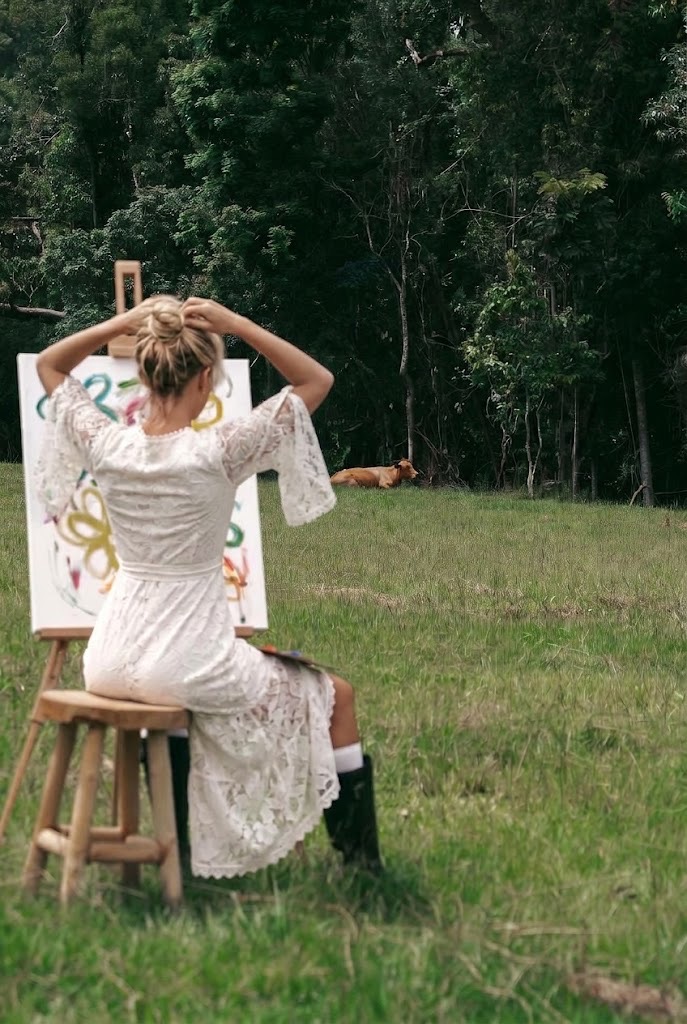
An ivory lace dress with a pair of boots and a field to walk through is not an editorial fantasy. It is an ordinary Tuesday, dressed properly. The car does not need repainting and neither, quite often, do you.
Keep the things that keep you
Eventually the dress, like the car, becomes less an object and more a companion. It holds seasons you would otherwise forget: the wedding, the wet picnic, the year everything changed. Fast fashion cannot store memories because it is not around long enough to make them.
So let things get worn. Let the lace soften and the colours mellow. Buy fewer, better things, and give them the years they were made for. Beauty that deepens is the only kind worth chasing.