Petite with a fuller bust.
The most common petite fitting problem has nothing to do with height. It is choosing a dress that fits the chest without swallowing everything below it.

Most size charts assume that as a woman's bust grows, so does everything else — her shoulders, her back, her torso length. For a woman who is 5'2" with a C, D, or DD cup, that assumption is simply wrong. Sizing up to clear the chest gives her a dress with dropped shoulders, a gaping neckline, a waist seam sitting on her hips, and sleeves past her knuckles.
The fix is not a bigger dress. It is a better-shaped one. Here is what to look for, and what to have altered once it arrives.
Size to the Bust, Then Tailor the Waist
A waist can be taken in for very little money. A bodice that pulls across the chest cannot be let out. Choose the size that clears your full-bust measurement without straining the front, then have the side seams nipped if the waist floats. It is the single change that makes the most difference on a petite frame.
Look for a Shaped Bodice, Not Just a Bigger One
Princess seams, bust darts, and a separate under-bust panel create room in three dimensions. A straight-cut bodice only adds width — which reads as bulk on a shorter torso. If you can see seaming that follows the curve of the chest, the dress will fit closer to your size without the pull lines.
Watch Where the Waist Seam Lands
On a petite frame the waist seam should sit at your natural waist, not two inches below it. When a bodice is too long, a fuller bust pushes the seam down further and the whole dress reads matronly. Measure from your shoulder to your natural waist and compare it to the garment's HPS-to-waist number before you order.
Necklines That Open the Chest
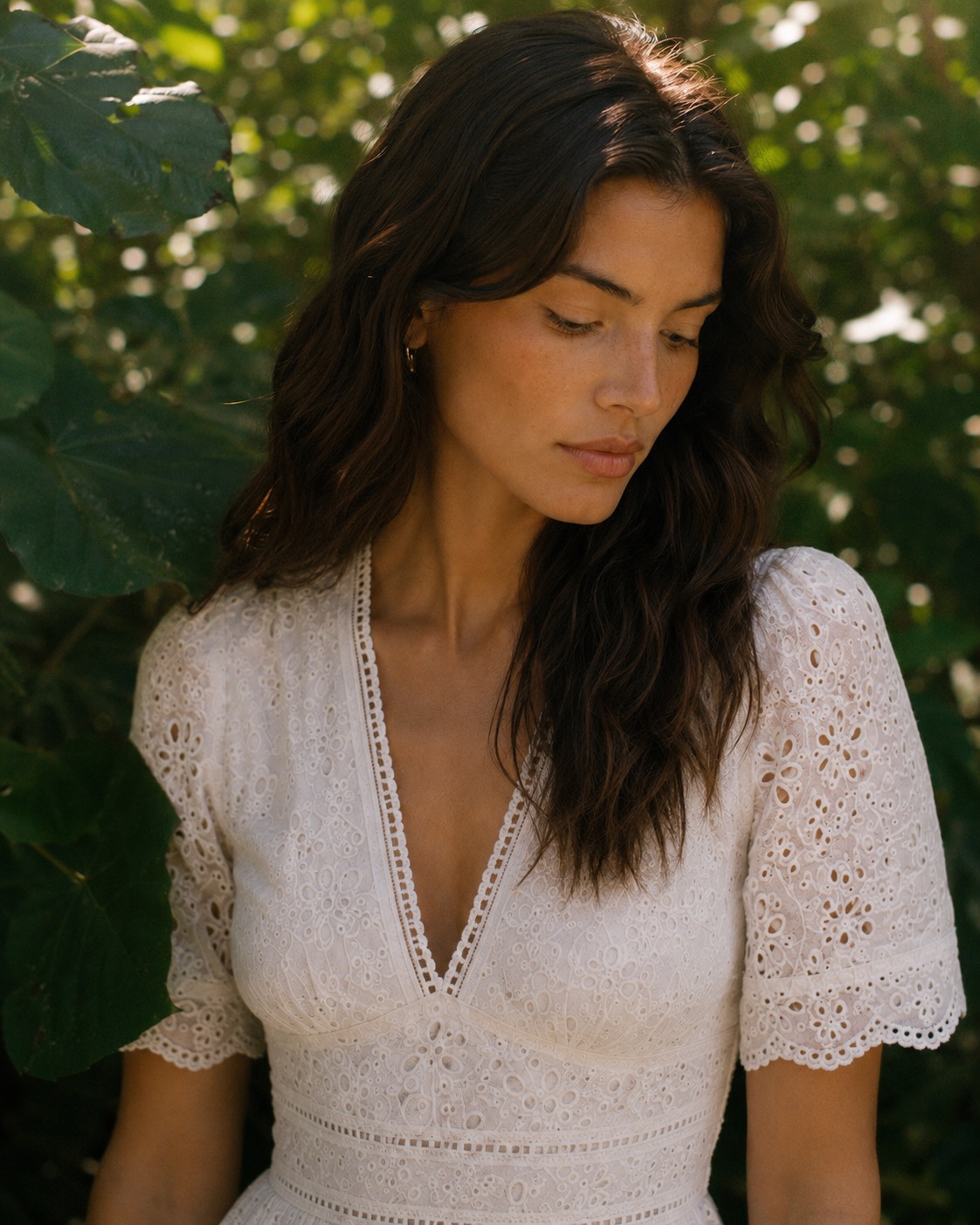
A V, a deep square, or a surplice wrap breaks up the expanse across the bust and lengthens the neck. High crews, bateaus, and shallow scoops do the opposite: they widen the top half and shorten a petite torso. A V-neck with an adjustable wrap tie is the most forgiving of all — it lets you set your own coverage.
Sleeves and Straps Carry the Weight
Thin spaghetti straps dig in and slide. A slightly wider set strap, a fitted short sleeve, or a lined bodice with real internal support holds the chest where it should sit. Look for adjustable straps and a lining that behaves like a foundation rather than an afterthought.
Skirt Volume Restores the Balance
If the top half is fuller, the skirt needs enough movement to answer it. A pleated or gently gathered A-line skirt balances a strong bust line. A narrow column does not — it stacks all the visual weight above the waist and makes a petite frame look top-heavy.
A practical order of operations: take your full-bust measurement and your shoulder-to-natural-waist measurement, compare both against the garment measurements rather than the size letter, and budget for one small alteration at the waist. That is usually all it takes.
We design our bodices with real bust shaping, a natural waist seam set for a 5'2" to 5'4" torso, and linings that hold. It means fewer compromises before the dress ever reaches a tailor.
Find your measurements first.
The Fit Guide walks through bust, waist, and torso length for petite frames — and how to read a garment spec before you buy.
Keep Reading
All Journal Entries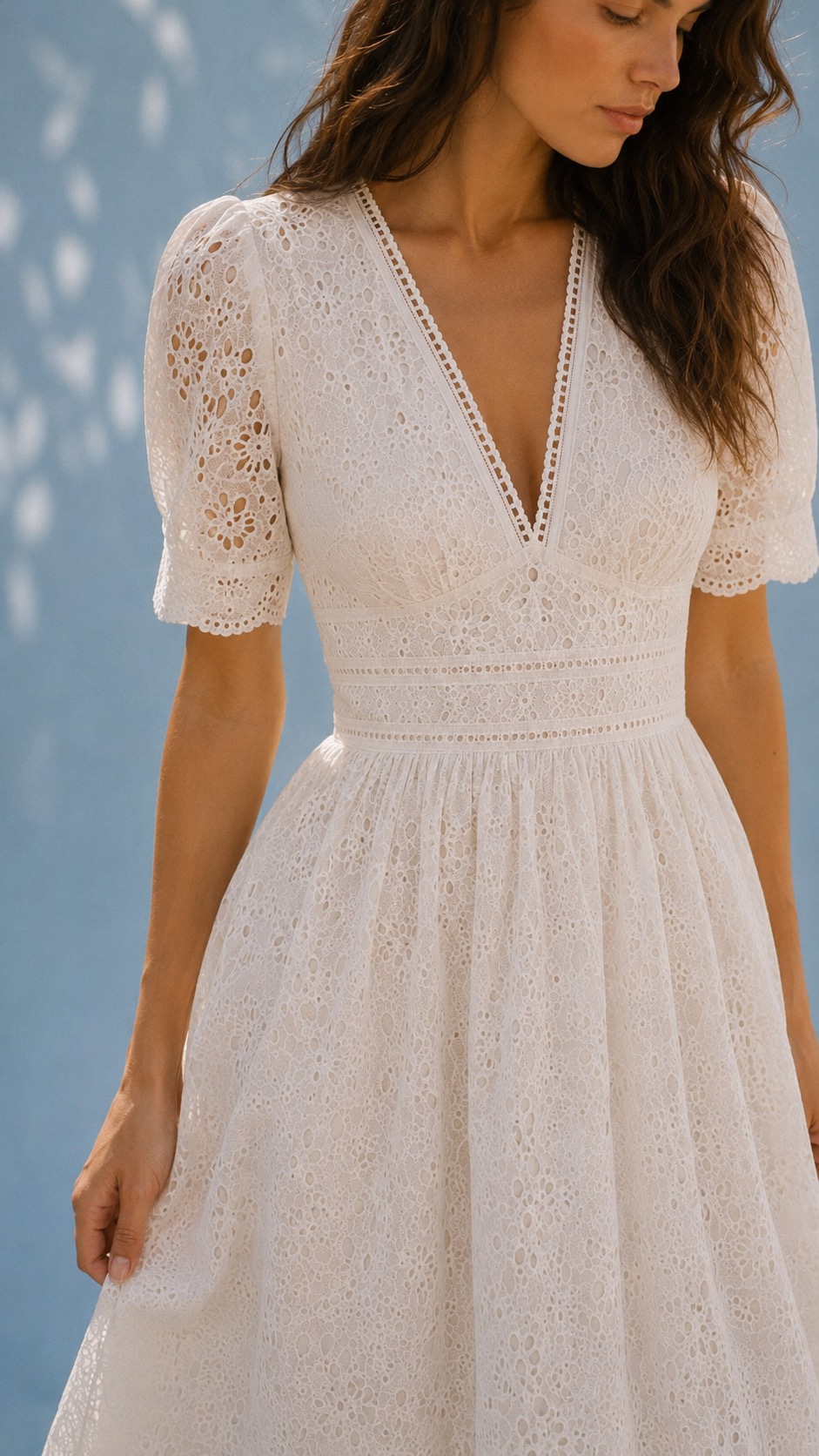
What to wear under white lace and eyelet.
Slips, bras, and seamless layers that actually disappear under openwork.

The petite dress length guide: mini, midi and maxi.
Exact HPS-to-hem measurements for every length on a frame 5'4" and under.
The definitive guide to petite pant proportions.
Rise, knee point, and inseam — the decisions that make a trouser flatter a shorter frame.