Why waist placement
changes everything.
When a dress feels almost right but never quite flattering, the waist is often the reason. Here is why an inch can change the entire silhouette.
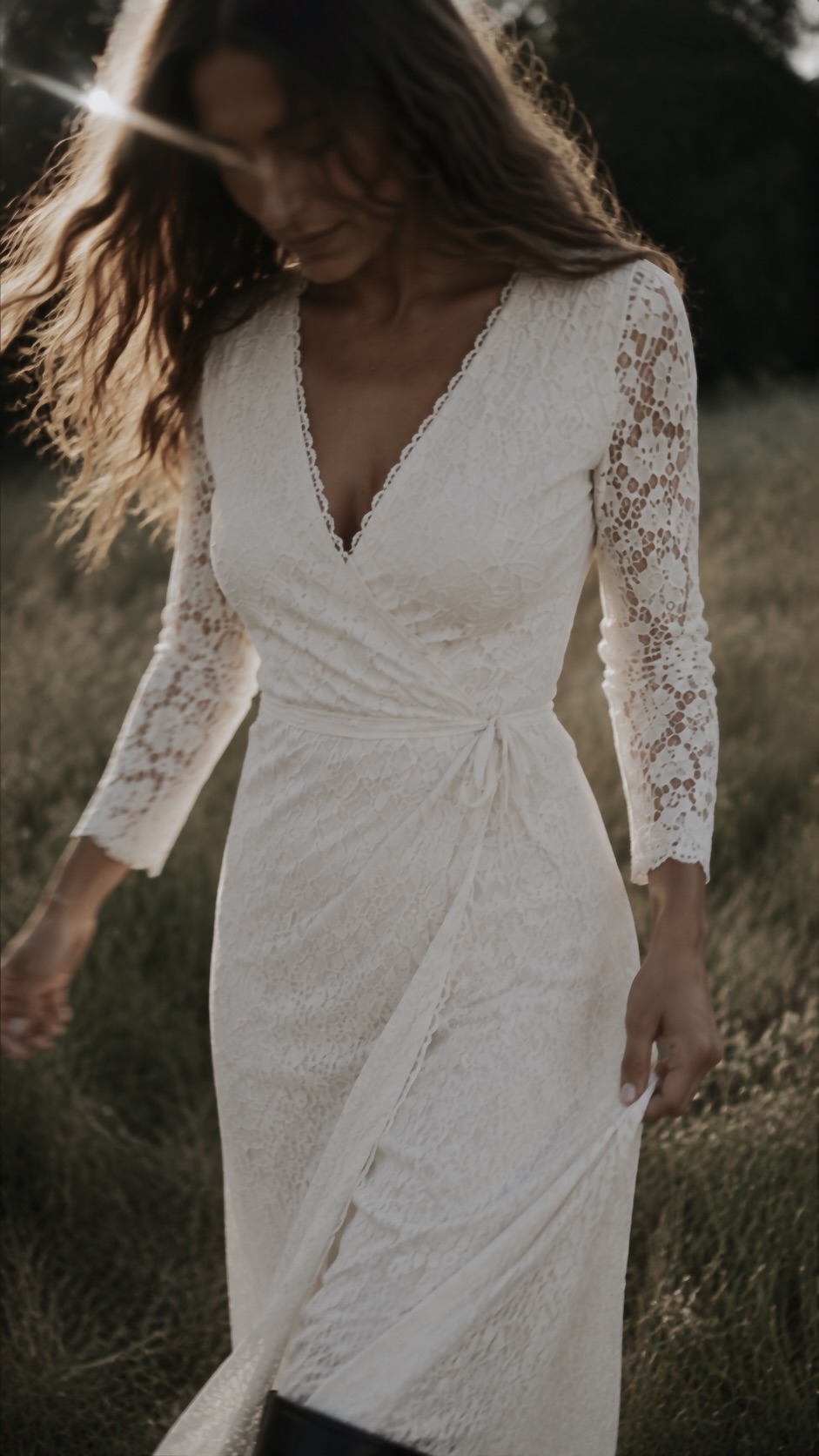
A dress can fit through the bust, close comfortably, and fall to the right length — and still feel strangely wrong. Often, the problem is not the size. It is the waist.
Waist placement controls more of a dress than the seam itself. It determines where the bodice ends, where the skirt begins, how long the legs appear, and whether fabric follows the body or gathers around it. On a petite frame, even an inch of extra bodice length can change the entire silhouette.
The waist is an anchor point
Most dresses are built around a series of horizontal landmarks: shoulder, bust, natural waist, hip, knee, and hem. When those points align with the person wearing the dress, the garment looks composed. When one falls too low, every section below it shifts with it.
A regular-length bodice on a petite woman often places the waist seam somewhere between the natural waist and upper hip. The fabric may wrinkle above the seam, the skirt may begin at its widest point, and the intended shape can disappear. What was designed as an elegant fit-and-flare may suddenly feel heavy or vaguely oversized.
Shortening the hem does not correct this. The dress becomes shorter, but its architecture remains in the wrong place.
How the right waist changes proportion
When the waist sits where it should, the eye reads a clear division between bodice and skirt. The upper body looks intentional rather than elongated, while the leg line begins higher and appears longer.
This matters particularly in midi and maxi dresses. A long skirt does not overwhelm a petite frame simply because it is long. It becomes overwhelming when the skirt begins too low, carries too much fabric, or breaks the body at an unflattering point. A correctly raised waist allows a petite maxi to keep its drama without borrowing inches from the wearer.
Natural waist
The narrowest part of the torso, usually just above the belly button.
Slightly raised waist
Positioned just above the natural waist to lengthen the leg line while preserving a grown-up silhouette.
Empire waist
Positioned directly beneath the bust, creating a longer uninterrupted skirt.
For many petite women, a natural or subtly raised waist offers the most balanced result. It defines the torso without shortening it too dramatically and gives the skirt room to fall cleanly.
How to check waist placement before you buy
Look at more than the size chart. If garment measurements are provided, compare the shoulder-to-waist measurement with a dress you already own and love. When you try the dress on, check three things:
- Does the seam sit at or slightly above the narrowest part of your torso?
- Does the fabric above it lie smoothly, without pooling or horizontal folds?
- Does the skirt fall away cleanly instead of beginning around the upper hip?
If the answer is yes, the pattern is working with your proportions.
The Nectar approach
At Nectar Petite, waist placement is decided from a petite block rather than moved after a regular-size pattern is finished. The Maribel Lace Dress uses a raised waist to bring the wrap-style bodice and long skirt into balance on women 5'4" and under.
It is a small technical decision with a visible result: the dress defines the body, the skirt begins where it should, and the full silhouette feels elegant rather than oversized. More on this in why petite fit is more than a shorter hem and the petite dress length guide.
See where the difference begins.
Explore dresses designed around petite shoulder, torso, waist, sleeve, and hem proportions — not simply shortened at the bottom.
Keep Reading
All Journal Entries
How to wear an ivory lace dress without looking bridal.
Texture, accessories, and setting decide whether lace reads ceremonial or everyday.

Why we make dresses in small batches.
Measured quantities let us protect the fit and produce less unnecessary inventory.

Petite with a fuller bust? How to choose a dress.
Six ways to fit the bust without swallowing everything below it.